
THE TRIPTYCH-Advent Calendar-Days 18 & 19 (from Book 1 The Cello)
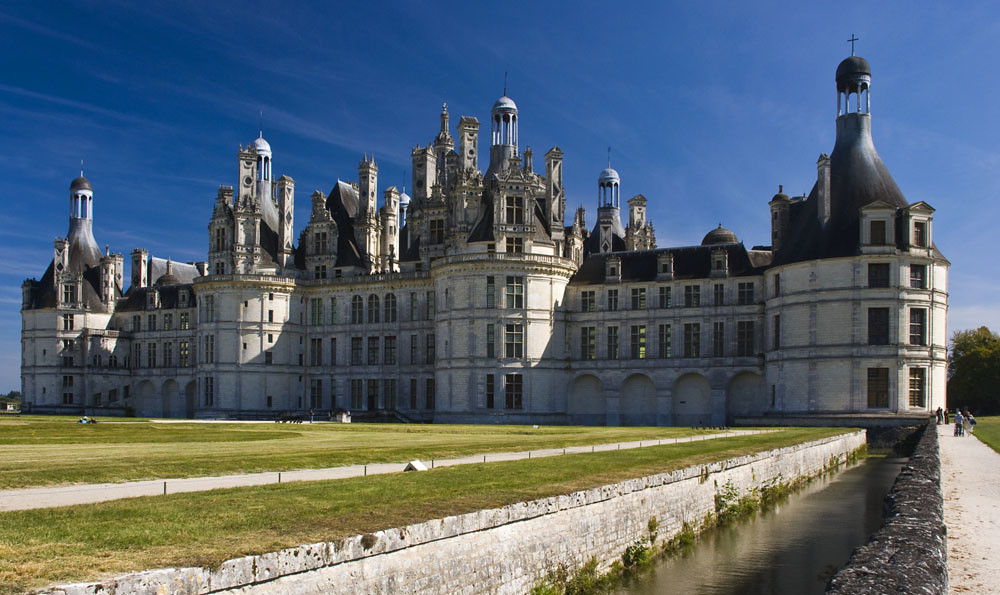
Chapter 7 – Loire, France, late July
Antero set up a reminder in his mobile with the date and time of his brother’s arrival at Nantes airport, then returned the phone to the pocket of his shirt and leaned back on his chair with his eyes closed. It had been a busy day at the building site. They’d found the wine cellars of the old château. Some bottles – not many –were still intact but he doubted there’d be anything remotely drinkable in any of them. Nevertheless, they’d been forced to wait for Mme Deschamps’s orders or in this case her son’s. He had immediately driven to the site in order to check the bottles. Guillaume might not know anything about cellos or musical instruments but he was a wine connoisseur.
After his visit the excavations resumed. They found nothing else of interest but Antero had been able to establish he could use part of the previous castle’s foundations. He was becoming fascinated with the history of the place and of the family who had once owned it. His initial research had uncovered little. He didn’t have time to carry out a deep dive but he had a feeling for stones, for ruins and somehow was able to visualise what might have been there before and build something beautiful based on it. He was happy with his initial plans – they’d won him the commission – but he thought they lacked depth, soul, character. He could only add those attributes after knowing more about the former château and its past. For the purpose he’d ordered Lucien to spend the next couple of weeks researching the archives of all the libraries in the region, public and private.
Feeling tired he opened his eyes, stretched and yawned, then glanced at his wrist watch. Six thirty. The men must have gone home. He should lock his office and do the same. His gaze fell casually on the card Mme Deschamps had left in his hand at the end of her first visit. He pressed his lips together and inhaled deeply through his nose, rolling the card between his fingers and wondering for the hundredth time whether to take up her invitation. Each time he thought about her – and truth be told it was most of the time – he felt aroused and longed to make love to her but always hesitated at the last minute before placing the call. She was after all his boss. Annoyed at his own reactions he threw the card angrily on top of his desk. Then with a resigned sigh he stood up, packed his laptop and locked away all the plans in the cupboard. His eyes fell on the card, resting face up where he’d thrown it. He hadn’t been with a woman for nearly a year. After the tempestuous relationship with his last rather temperamental girlfriend he’d decided he needed a break from going steady. He raised an eyebrow. The last thing on Mme Deschamps’s mind was probably a steady relationship, he thought to himself. Taken by a sudden impulse he picked up her card with the intention of calling her. At that precise moment Legrand, the foreman, unceremoniously burst into the office, out of breath and covered in mud.
‘What the hell happened to you?’ he asked. Legrand’s appearance was generally tidy, neat and clean, even after a day’s work on the building site.
The foreman smiled brightly, his eyes wide open with joy. He showed him what he had in his hands.
‘This, Reeve. This happened.’ Legrand seemed excited and kept waving a coffer or box of some kind at him. They had agreed a few weeks back to drop the formal Monsieur and just leave it at their surnames.
Antero stared at his usually quiet, serious foreman and the box he was holding without understanding his excitement or grasping his deplorable appearance. Legrand smiled. He carefully placed the box on Antero’s desk and then began his story.
‘The men had just left for home. I’d ordered Louis and Pierre to jump into the hole where we found the cello and dig a little more just to make sure nothing else was there before we closed it or used it as part of the new foundations.’ He paused to bring his breath under control. It was obvious he’d been straining physically.
Antero pulled a chair from the side, making him a sign to sit down and relax, then took his usual seat and stared at the box. It was an unusual thing. Although rather dirty from centuries underground it appeared made of a translucent material and some dark metal. Carefully Antero began removing the dirt. Was it glass? He lifted his eyes to Legrand who said, ‘I know what you’re thinking. It isn’t glass. Look at this bit that I cleaned properly.’ He pointed at one of the panels that shone in the light. ‘I think it’s rock crystal or crystal of some kind and the metal’s probably silver.’
Antero jumped up in wonder. He’d seen a cupboard made of quartz and ebony, dating back to the early 18th Century and much larger than this box, in the Green Vault Museum of the Dresden Royal Palace. It belonged to the collection of treasures of the famous Kurfürst of Saxony and King of Poland, August the Strong.
‘It’s precious then,’ he said while pushing a bottle of cold mineral water towards his foreman who really looked hot and bothered.
‘Thank you,’ Legrand replied.
He drank nearly half the bottle, then inhaled deeply and resumed speaking.
‘Louis and Pierre said there could be something on the side, behind the place where the cello was leaning. They mentioned they’d felt something hard but thought it was just a big stone. They didn’t stop to see, instead just kept digging down rather than sideways. I didn’t ask them to try again because it was the end of the day. But after they’d left I decided to have a go myself. I jumped into the hole and began digging horizontally, you know, as if excavating a small tunnel.’ He paused to drink more water.
‘And then?’ Antero encouraged him, beginning to feel intrigued.
‘Then my shovel hit something hard.’
‘This thing … this box?’ Antero asked the obvious, pointing at the object on his desk.
‘Yes, this box. I put my arms inside the hole and managed to pull it out. That’s why I look like this.’ He indicated his muddy clothes, hands and arms with an amused grin.
‘Did you look inside?’
‘No, not yet. I noticed you were still here so I thought we’d open it together.’
Antero nodded while standing up and grabbing a towel. He threw it at Legrand who began cleaning himself up. Fetching an old rag, he started removing the dirt covering the box. It must have once served as a coffer perhaps for jewellery or important documents because it had a key hole. There was no key but trying it gently Antero realised it wasn’t locked and so opened it easily. Inside, rolled in a piece of linen, Antero found a small canvas tied up with a blue ribbon. He pulled the ribbon gently but it nearly disintegrated. Carefully he began unrolling the canvas.
‘It’s a painting and it’s been cut out of its frame,’ he commented, intrigued.
Legrand nodded as Antero continued to uncover the painting. He stretched it delicately on his desk, holding one end with his fingers while Legrand held the top. It revealed the portrait of a beautiful woman. They stared at it, wondering who she could be and why the portrait could have been buried. She must have been a lady of importance and rank, judging by the way her hair was done, held in place by what seemed like blue silk ribbons. Her elegant dress appeared to be made of light blue satin, matching the ribbons, and there was a simple but beautiful set of pearls around her long, graceful neck. She had a lovely face with delicate features framed by hair in a lustrous, radiant golden colour; wide unusual, luminous eyes in piercing turquoise blue, gracefully arched eyebrows, resembling the wings of a swan, and long eyelashes. She was sitting at a desk full of opened music scores – one arm resting on the table, her hand holding a music sheet, the other leisurely placed on her lap. Besides the pearls, her only jewellery consisted of a simple gold ring on her left hand. The portrait was unusual because she wasn’t facing or glancing at the painter. Her face was turned slightly, perhaps towards a window. It was bathed in light. Her gaze was lifted towards the light in contemplation of something high above her, as if she was day-dreaming. Her smile was one of pure delight. She appeared to be reliving some happy memory. Antero and Legrand stood smitten, almost hypnotised. They couldn’t take their eyes off the portrait.
‘My God,’ Legrand finally managed to say. ‘I’ve never seen such a beautiful face in my life before.’
‘Yes, truly beautiful, you’re right.’
‘Who do you suppose she is?’
‘I’ve no idea. But the painting appears really old.’
‘You think it might be as old as the cello?’
‘Probably … that’s if the cello really turns out to be genuine and the label isn’t a fake, of course,’ Antero said, leaning forward to examine the painting in more detail.
Nearly sticking his nose inside the coffer Legrand asked, ‘Is there a certificate? A date? A signature on the painting? Some sort of inscription? Anything?’
They both examined the quartz panels and the metal holding them as well as the painting but could see nothing. No marks, no document stating value or reasons for hiding them underground.
‘There’s something here, in the corner of the painting but it’s very faded,’ Antero said. ‘Can you please give me the magnifying glass?’
The foreman handed it over and Antero pointed it at the bottom right hand corner.
‘Here. Can you see?’
Legrand nodded. ‘It looks like some sort of scribble.’
‘Yes. Perhaps the artist’s signature or the name of the lady he painted. It’s too faded though. I can’t figure it out.’
‘Shame.’
‘Indeed.’
‘What do you think we should do?’
‘I don’t know. I suppose we’d better tell Mme Deschamps. Coffer and painting were found in her property so they’re hers.’
‘Do you want me to call her assistant? I’ve got his number.’
‘Her assistant? No … er … there’s no need. It’s late … er … I think … er … I’ll send her an e-mail … or … you can phone her assistant tomorrow … first thing tomorrow morning.’ Antero felt angry with himself for stuttering. His eyes had fallen on Amira’s card again and he felt awkward remembering her seduction and his own growing desire.
Legrand stared at him. He seemed surprised at his reaction but made no comment. Instead he simply asked what to do with such a box and the painting, as they were probably both precious.
Photo: Chateau de Chambord, Loire Valley, France – by Malcolm Bull