
THE TRIPTYCH-Advent Calendar-Days 21 & 22 (from Book 1 The Cello)
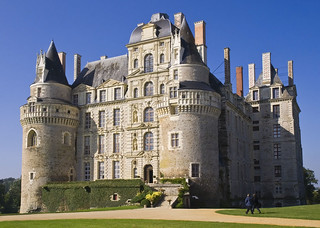
In the 18th Century
Chapter III – Châtelet-sur-Loire, France, August 1708
Letter from Madame la duchesse de Châtelet-sur-Loire, Catherine Marie de Plessis-Beaumont, to her father Heinrich Albrecht, Markgraf von Friedberg.
Mein lieber Vater,
A year has passed since my wedding. I miss your dear company and that of my brother. How is dear Berthold? I have not received a letter from him or his wife for the past four months. God willing, they will both be in good health, as will my delightful nephew, little Albrecht, and will write to me soon.
I had hoped to have some happy news to announce to you, dearest father. I thought I was with child. Unfortunately, it was a false alarm and God has not yet granted me such happiness.
During these sad days my comfort is my music but liebster Vater, as of late, I am no longer allowed such consolation. At least not in the form of my favourite instrument. The beautiful violoncello that you acquired for my birthday seven years ago during the happy times when we resided in Florence, is no more. My mother-in-law, the Dowager Duchess, does not believe it suitable for a lady of my rank and she has convinced my husband that he should not allow me to play it. However much Gaston loves me – and I am aware that he does so – he almost always follows his mother’s advice. So, to my utter dismay, the violoncello was taken away from me and destroyed, broken into small pieces to be used as firewood. I was most distraught and only now, three weeks after the sad event, can I write about it. Gaston permits me to play the harpsichord. A fine instrument but it does not grant me the same pleasure as the violoncello.
The Dowager Duchess affirms the violoncello is of bad taste, an ungodly instrument, almost certainly devised by the devil himself! In my mother-in-law’s own words: “It is not decorous for a lady of rank to play the violoncello. Its posture is evil and damaging, especially if you might be expecting, my dear Madame”. I was not expecting after all but I certainly do not understand what evil could have possibly come from continuing to play my favourite instrument. Unlike a male player, I never held it between my legs. It would not be practical or becoming. It is true that the position was not the most comfortable but I never fell ill during all the years I have been playing it and you, liebster Vater, can certainly attest to the truth of this statement.
Be assured, dearest father, that I am not unhappy and I do not regret my marriage to Gaston. I love him now as much as I did then. He is a kind man and as good a husband as any woman could wish but he always acts at his mother’s pleasure, which mostly differs from my own. I confess my surprise at the fact that he managed to assert his authority and marry me for it is obvious she considers him my superior. The Dowager Duchess believes her son married clearly beneath his status and that he was extremely foolish in marrying for love. I am certain she had more ambitious plans for him – possibly, a princess of the blood, as she continuously speaks of her youngest daughter who married a minor royal even though she treats him as if he were the King himself or one of his legitimate children. I do not venture such words except to you, my dear father, as I know you will comprehend my sorrow.
I beg you, please write to me immediately upon receipt of this letter and forgive me for its sad contents but please be assured I am well. I look forward to your comforting words and to your visit at Christmas.
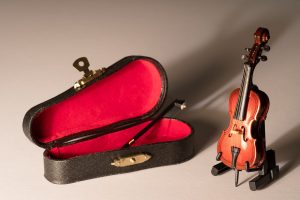
Chapter IV – Cremona, Italy, early June 1711
Omobono Stradivari entered his father’s workshop whistling a melody. The sun was shining warm in a luminous blue sky. What a beautiful day. He felt happy to be alive but his mood declined at once as he set eyes on his brother Francesco and their father frowning over a letter.
He asked in a sympathetic tone, ‘Father, what is the matter?’
Antonio Stradivari lifted his eyes to his younger son. For the first time in his life Omobono felt a pang in his chest. His father at sixty-seven was beginning to look old and frail. He swallowed his worries and waited anxiously for an answer.
‘Il marchese di Friedberg mi ha scritto,’ Stradivari said. He seemed disheartened. Handing over the letter to his son he added, ‘Read it, please.’
Omobono lowered his eyes to the elegant calligraphy of the missive and read aloud.
Mio caro signore Stradivari
I hope you are well and your business is thriving through the grace of God, our Lord. I am assuming the illnesses that have plagued you since I last sent you my commission will have vanished by now. I sincerely hope you have returned to health and been able to resume your work. After all, nearly two years have passed.
I write to inform you that my son Berthold is travelling and will soon arrive in the fine city of Cremona – God permitting that all shall be well – on the 23rd of June of the current year of our Lord. I am hoping the violoncello, which I ordered for my daughter, is finally completed. I expect my son to pay you a visit in your workshop, hand you the sum agreed as payment for the instrument and bring it back to Friedberg.
I am grateful for your efforts and shall no doubt be pleased with your workmanship.
I am in the Grace of God,
Heinrich Albrecht, Markgraf von Friedberg
Omobono stared alternately at his father and his brother without understanding. As far as he was concerned there was nothing strange about the letter.
He shrugged and asked, ‘So, is there a problem? I cannot see any.’
It was his brother Francesco who answered.
‘Yes, Omobono, of course there is a problem. Father hasn’t completed the instrument. As il marchese didn’t pay in advance and the order came from so far away, father decided that he would only start making the violoncello when the marchese sent a payment deposit.’
‘I see. Yes, I remember now. I understand. You’re worried, father, because we haven’t the necessary wood at the moment and even if we were to obtain it soon, the violoncello would not be ready on time for the young marchese to take home and so you fear the rage of the old. Am I correct?’
Stradivari appeared dejected, guilty for not having trusted the word of a noble man such as the Markgraf von Friedberg. He lifted his eyes to his son, nodded, but did not speak.
With his usual vivacity and energetic approach, Omobono smiled, shook his head and taking his father’s wrinkled but still steady hand in his, said, ‘Do not worry father. We have enough left of that excellent quality maple wood block. The one you acquired two years ago. Remember? There is enough to build a new violoncello.’
Stradivari’s hand shook slightly. ‘Are you talking about the wood with the striped pattern?’ he asked his son.
Omobono hugged him. ‘Yes, father. We have enough for a violoncello. Is it not true, Francesco?’ He turned to his brother for support. Francesco nodded.
‘Well then, the three of us will work together and have it ready on time for the young marchese to take to his father,’ he finished in an optimistic tone.
Antonio Stradivari seemed to find his taste for living once again. Why had he not remembered the block of maple wood before? Of course, there was still enough left for a cello and it would be a beautiful instrument, he promised himself silently, one of his most magnificent.
And so it was when Berthold von Friedberg arrived to take the cello a few weeks later he was delighted to see how elegant an instrument it was. He asked to play it as a test and after doing it, declared it the most admirable violoncello he had ever seen or heard.
Stradivari smiled, pleased, as the young man handed him the leather purse, sent by his father, with the agreed payment. Berthold was carefully placing the instrument into his box when the old master realised he had neglected to tell him about the error on the label. Stradivari opened his mouth to inform the young marchese about it. He hesitated. In the rush to have the order ready on time an old print block had been used and Stradivari realised – too late – that his name was incorrectly spelt.
‘Signore von Friedberg,’ he began. ‘I made a small mistake when I completed this instrument.’
Berthold gazed at the old master. His smile vanished and he glared at the leather purse, wondering if he should withdraw payment.
‘It was dark,’ Stradivari continued, ‘and I picked up an old print block I have not used for a long time … since after I made improvements in my workshop eleven years ago, in the spring of 1700. This means the label bearing the date and my name, as the maker of the instrument, bears an error. My name appears as Antonins rather than Antonius. The letter u is upside down.’
To Stradivari’s relief, Berthold von Friedberg began laughing heartily.
‘Master Stradivari,’ he said, ‘I believe you have exceeded yourself with this instrument. It is indeed an instrument worthy of a duchess such as my dear sister to whom my father intends to present it. Please do not trouble yourself,’ his tone was slightly amused, ‘with something insignificant as the misspelling of your name. I shall inform my father of the fact but I’m certain he will see it as I do. It does not interfere with its sound, therefore it bears no relevance.’
Stradivari bowed his nearly venerable head, grateful for the words of the young marchese, and respectfully accompanied him outside. He stood quietly on the street until Berthold climbed into his carriage and, with a friendly wave of his hand to the old master, ordered his coachman to depart at full speed.
Photos: Chateau de Brissac & cello by Malcolm Bull